The Work
Adoration
Adoration â Sideboard Tableaux
In the collection of the National Gallery of Victoria
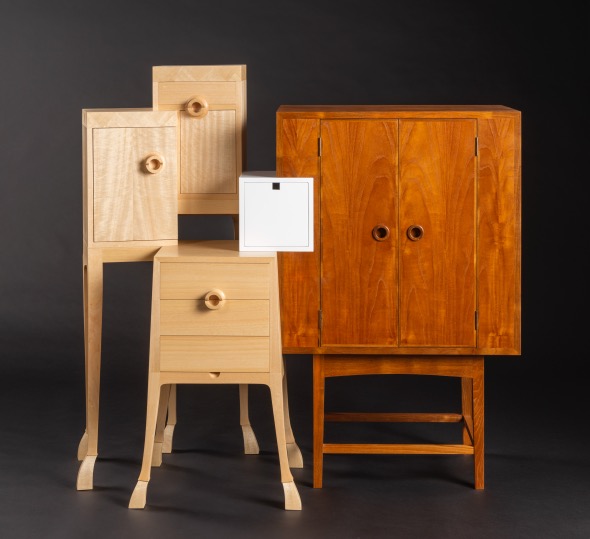
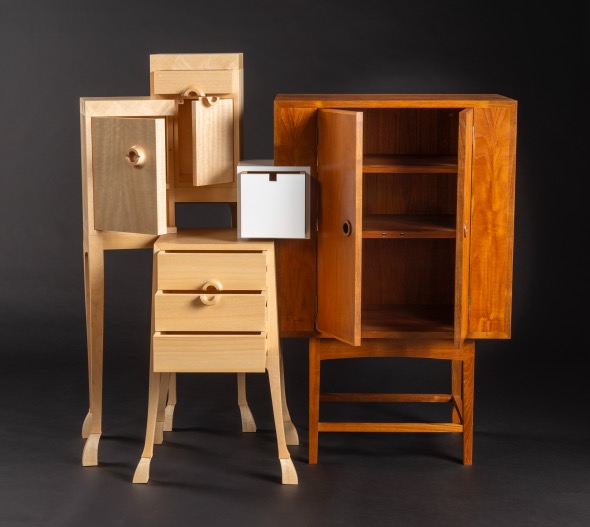
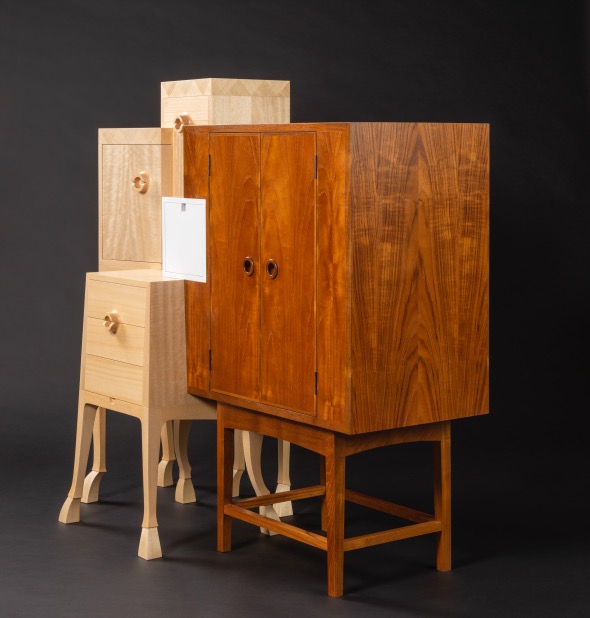
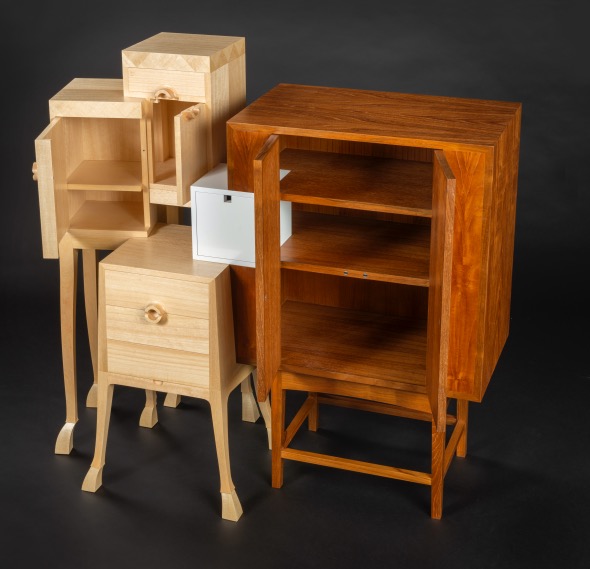
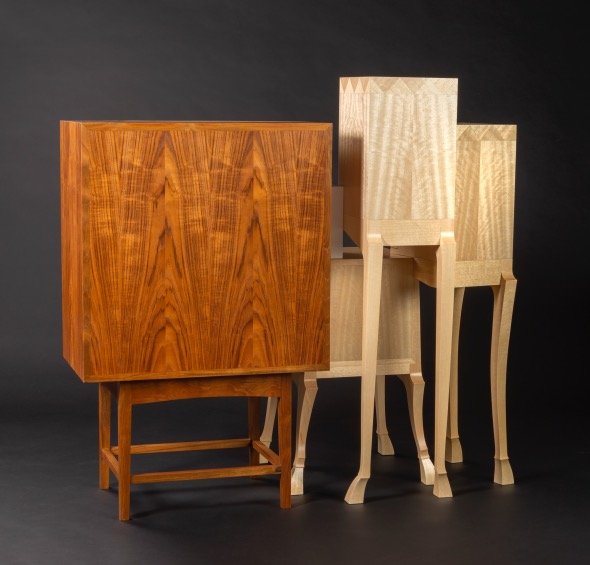
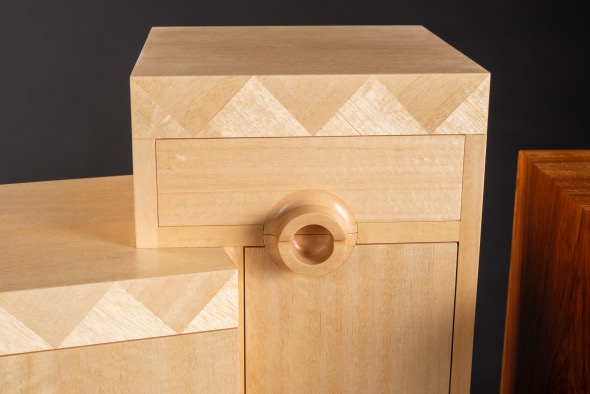
The cabinet presents as a âclusterâ or tableau of forms â a âmid-centuryâ type teak cabinet with a white cube half inset, half protruding, on the left.
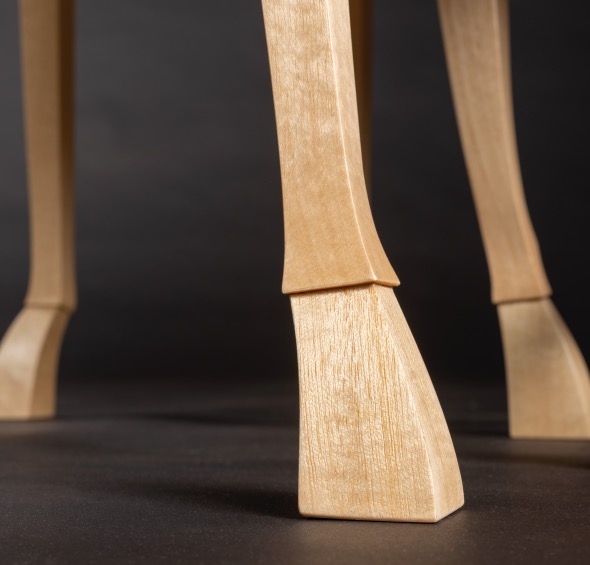
Abutting that further to the left is a cluster of three teraphim-type, zoomorphic cabinet forms presented in a continuum. Two facing forwards and the end cabinet facing in at 45 degrees. Two (internally connected) Teraphim have doors and one has drawers.
That is, a tableau of interrelated shapes representing a continuum of three categories:
- a primary, white, cube
- a secondary âmoderneâ focus,
- a tertiary cluster of three zoomorphic craft/design-based cabinets in adoration.
On one level the work references the privileging of primary minimalism through the tongue-in-cheek key components of an Adoration of the Magi metaphor.
Adoration is intended to work in at least four categories and at two levels of salience:
So, our categories at the first of the two levels of salience are:
- furniture/functional object/applied design (furniture, woodwork, craft, materiality, minimisation, reductivism), primary forms, essence, modernism, modernity);
- sculpture/artistic object (theatre, tableau, stillness/animation, story);
At the second level of salience:
- myth, metaphor â a kind of historical conceptualism;
- synthesis - operating on the level of iconographic personal style (high ceremony: adoration/veneration) and low ceremony: including personal and domestic memory).
Related Work